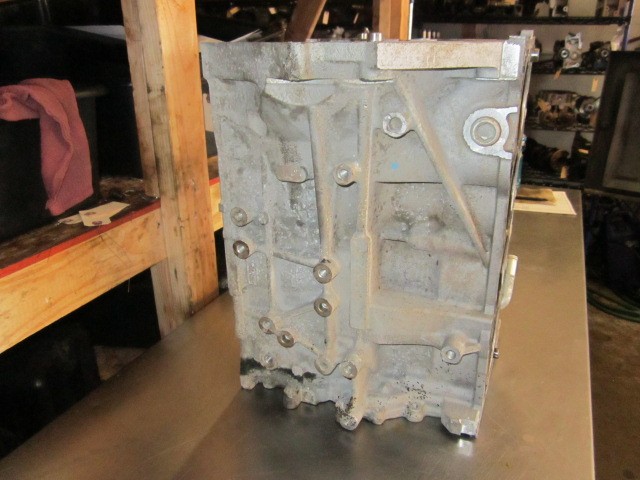
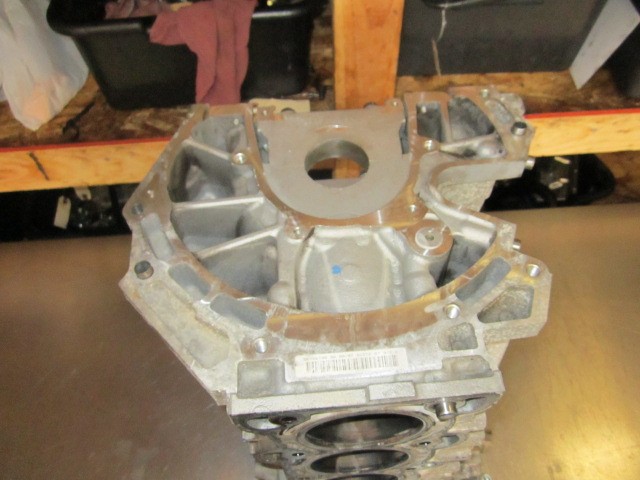
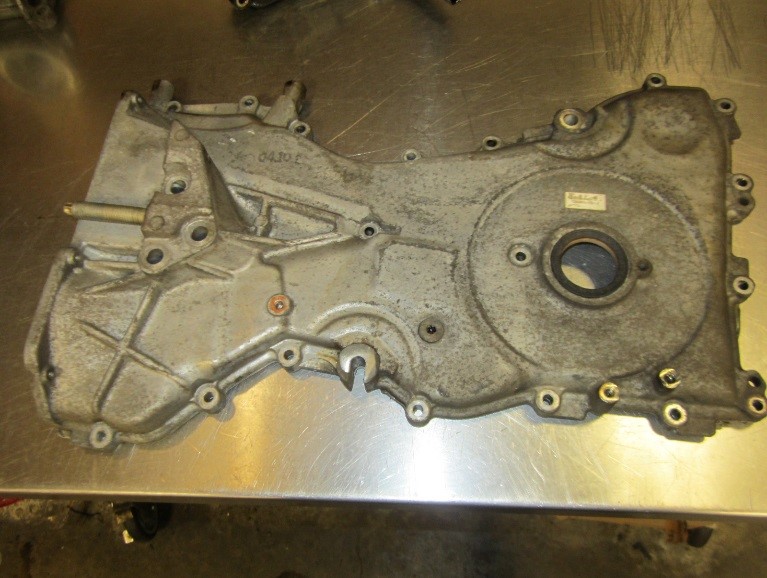
Introduced in non-North American markets for the MY2008 and North American markets for MY2009, the 2.5L L5-VE is an updated, bored and stroked version of the L3-VE 2.3L. The 2.5L (2,488 cc (151.8 cu in)) L5 engine has an 89.0 mm (3.50 in) bore and a 100.0 mm (3.94 in) stroke, with a compression ratio of 9.7:1. The standard crankshaft is forged-steel with eight counterweights like the turbocharged DISI 2.3L L3-VDT. To increase durability of the bore, Mazda uses a 4340 steel-molybdenum alloy material for the cylinder liners. This offers enhanced high-heat tolerance as well as reduced friction. The increased stroke of 100 mm (3.9 in), up from 94 mm (3.7 in) of the L3, allows a taller (numerically lower) final-drive ratio resulting in lower-rpm while cruising to increase fuel economy. It also uses iVCT. It produces 170 bhp (130 kW) at its 6000 rpm redline (168 hp (125 kW) in PZEV trim) and 167 lb·ft (226 N·m) of torque at 4000 rpm (166 lb·ft (225 N·m) in PZEV trim). Certain versions are rated at 175 hp (130 kW) at 6000 rpm with 172 lb·ft (233 N·m) of torque at 4500 rpm.
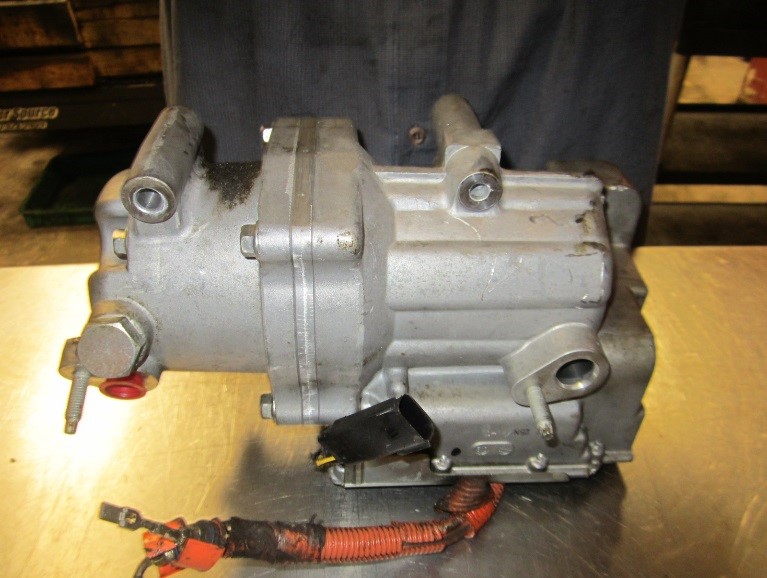
Ford has developed an Atkinson cycle variant of the Mazda L5 engine for use in the Ford Fusion Hybrid vehicle. The Atkinson cycle engine was named one of Ward's 10 Best Engines for 2010. Fuel saving features include adaptive knock control and aggressive deceleration fuel cutoff.[5] This and the 2.3 L competed with Toyota's 2.4 L 2AZ-FE engine, sharing similar technology.
This engine is built in Chihuahua, Mexico.[WIKI]
|