|
||||||||||||||||||||||||||||||||||||||||||||||||||||||||||||||||||||||||||||||||||||||||||||||||||||||||||||||||||||||||||||||||||||||||||||||||||||||||||||||||||||||||||||||||||||||||||||||||||||||||||||||||||||||||||||||||||||||||||||||||||||||||||||||||||||||||||||||||||||||||||||||||||||||
|
Progress Report-2002 |
||||||||||||||||||||||||||||||||||||||||||||||||||||||||||||||||||||||||||||||||||||||||||||||||||||||||||||||||||||||||||||||||||||||||||||||||||||||||||||||||||||||||||||||||||||||||||||||||||||||||||||||||||||||||||||||||||||||||||||||||||||||||||||||||||||||||||||||||||||||||||||||||||||||
|
NOTICE |
||||||||||||||||||||||||||||||||||||||||||||||||||||||||||||||||||||||||||||||||||||||||||||||||||||||||||||||||||||||||||||||||||||||||||||||||||||||||||||||||||||||||||||||||||||||||||||||||||||||||||||||||||||||||||||||||||||||||||||||||||||||||||||||||||||||||||||||||||||||||||||||||||||||
|
|
||||||||||||||||||||||||||||||||||||||||||||||||||||||||||||||||||||||||||||||||||||||||||||||||||||||||||||||||||||||||||||||||||||||||||||||||||||||||||||||||||||||||||||||||||||||||||||||||||||||||||||||||||||||||||||||||||||||||||||||||||||||||||||||||||||||||||||||||||||||||||||||||||||||
|
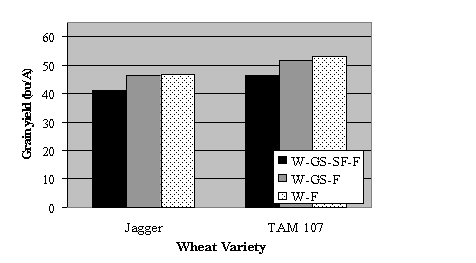
1. TITLE: Integrated Management Systems for Jointed Goatgrass Control in the Central Great Plains. 2. PERSONNEL: Phillip W. Stahlman and Anthony D. White Kansas State University, Agricultural Research Center-Hays 3. TIME LINE: Initiated - Fall, 1996; Projected completion- Fall, 2003; On Schedule. 4. ORIGINAL HYPOTHESIS: Integrating use of competitive winter wheat cultivars, limited tillage during fallow periods as compared to no tillage, and multi-year crop rotations will hasten control and reduce the impact of jointed goatgrass more than any of the component practices alone. 5. SUMMARY OF PROGRESS: 1996-2002: Spring jointed goatgrass populations in wheat plots decreased from 15 plants/yd2 in 1997 to <0.1 plants/yd2 in 1998 and 1999, regardless of main treatment effects. Thus, the entire experimental area was reinfested with jointed goatgrass spikelets (three accessions) in the fall of 1999 to renew the seed bank. In 2000 and 2001, W-GS-SF-W and W-GS-F crop rotations reduced jointed goatgrass densities between 10 and 30% compared to the W-F rotation. Jointed goatgrass densities in the 2002 wheat crop were <0.5 plants/yd2, thus dockage was minimal. Drought in 2002 limited jointed goatgrass germination until after abundant rainfall in August. Soon thereafter, fallow plots in the two-year W-F rotation contained 170-times more jointed goatgrass spikelets than the three or four year crop rotations. Results were similar when density counts were taken in October 2002. Differences between methods of fallow weed management have varied considerably between years, but in dryer years tillage has tended to reduce seed bank decline by drying the soil to the depth of tillage, thereby reducing jointed goatgrass germination and subsequent destruction in fallow. Wheat varieties have had little or no affect on jointed goatgrass densities in most years, but wheat yields have often differed between varieties. Despite similar jointed goatgrass populations, grain of the taller of two varieties in 2001 contained more jointed goatgrass dockage than the shorter variety. Extending the GS-F-W rotation by including sunflower in the year following sorghum has reduced the yield of grain sorghum grown two years later in 4 of 6 years by an average 8.4%, and as much as 41%, compared to sorghum in the GS-F-W rotation. Sunflower roots are known to extract moisture and nutrients from as deep as 10 ft, compared to progressively shallower depths for sorghum and wheat. Sunflower in the rotation reduced wheat yields for the first time in this study in 2002; ironically, sorghum yield was not affected in 2002. 6. OBJECTIVES: To evaluate integrated, multi-component systems for jointed goatgrass management in winter wheat-based crop rotations. 7. EXPERIMENTAL DESIGN: Split-split plot with four replications. Main plots - Crop Rotation (W-F, W-GS-F, and W-GS-SF-F); Sub plots - Method of Fallow Management (herbicides and tillage); and sub-sub plots - Winter Wheat Cultivar (two cultivars of differing stature and competitiveness). Jagger was substituted for Ike in 2000-2002. TAM 107 was used in from 1997 to 2002. However, in 2001 Vista was mistakenly substituted for TAM 107. Jointed goatgrass count means are the average of four subsample quadrates (0.8361 yd2/quadrate) in each plot. 8. PROGRESS 2002: Objective. To evaluate integrated, multi-component systems for jointed goatgrass management in winter wheat-based crop rotations. Crop Rotations. Drought conditions preceding and during the 2001-02 growing season limited fall and spring germination of jointed goatgrass and impacted row crop yields. Winter jointed goatgrass mortality was not calculated due to the low populations throughout the experimental area. Despite lack of precipitation, wheat yields averaged 48 bu/A for all treatments. However, an interaction between crop rotation and wheat variety occurred for winter wheat grain yield (Figure 1). No differences occurred between the W-F and W-GS-F rotations (Figure 1; Table 1). However, when sunflower was added to the rotation (W-GS-SF-F), wheat yields were reduced by up to 12% compared to the other rotations, but not in prior years with more moisture. Fallow-period precipitation the previous summer and fall and winter precipitation apparently was not sufficient to recharge subsoil moisture that was depleted by sunflower grown 18 months earlier. In previous years, yields of grain sorghum grown two years after sunflower have been reduced. Fewer than four jointed goatgrass plants/yd2 emerged between wheat planting and harvest in all rotations. Post-harvest rainfall and moderate temperatures during late July and early August provided good germination conditions for jointed goatgrass. Late August and October density counts revealed that the two year rotation fallow treatments contained 170-times more jointed goatgrass seedlings compared to the three and four year rotations (Table 1). The extreme germination event was fueled only by the existing seed bank since jointed goatgrass was not allowed to produce seed in the fallow period. Fallow Weed Control. Similar to the previous year, more jointed goatgrass plants emerged and sunflower yields were higher in herbicide-managed fallow compared to the tillage treatment (Table 2). Tillage likely decreased soil moisture in the topsoil more than no-tillage, thus creating less favorable conditions for jointed goatgrass germination and sunflower development. Wheat yields were similar between methods of post-harvest weed management. However, both grain sorghum and sunflower yields were 7% higher in herbicide-managed treatments compared to tillage. Increased moisture loss due to tillage is believed to have contributed to decreased yields. Wheat Variety. Jointed goatgrass populations were similar between wheat varieties throughout the growing season. However, an unexplained increase in post harvest jointed goatgrass density was observed in Jagger compared to TAM 107, the shorter and less competitive rated variety. TAM 107 treatments contained nearly 18% more wheat tillers at harvest than Jagger, explaining the 11% yield increase over Jagger. Yield differences due to jointed goatgrass competition were unlikely due to the low populations in all treatments throughout the growing season. However, fewer wheat tillers in Jagger wheat treatments may have reduced crop-weed competition and provided conditions favorable for increased seed production over TAM 107. Increased jointed goatgrass seed rain in 2002 would have resulted and helps explain the increase in jointed goatgrass plants present in post-harvest wheat plots (August and October; Table 2). Differences occurred in sunflower yield between previously grown wheat varieties. Reasons for this are difficult to interpret since limited data is available from prior years and because of bird and rodent damage. 9. PUBLICATIONS: Geier, P.W., P.W. Stahlman, D.E. Peterson, and S.D. Miller. 2002. Application timing affects BAY MKH 6561 and MON 37500 Efficacy and Crop Response in Winter Wheat. Weed Technol. 16:800-806. Kappler, B.F., D.J. Lyon, P.W. Stahlman, S.D. Miller, and K.M. Eskridge. 2002. Wheat plant density influences jointed goatgrass (Aegilops cylindrica) competitiveness. Weed Technol. 16:102-108. White, T. 2002. Jointed goatgrass: A threat to winter wheat production. North Central Weed Sci. Soc. Abstr. 57. [CD-ROM Computer File]. North Central Weed Sci. Soc., Champaign, IL. (Dec. 2002). 10. TECHNOLOGY TRANSFER: Aspects of this research were discussed at field days and producer meetings in Kansas and other states throughout the Great Plains, and at the National Association of Wheat Growers Research Forum in Albuquerque, NM in January 2003. 11. PRODUCER RECOMMENDATIONS IN THE CENTRAL GREAT PLAINS: · Integrating multiple management practices is more effective than any one practice alone. Single component practices seldom are successful over the long term. A successful best management practices (BMP) program should include: crop rotation, successful seed bank management in fallow, and optimum wheat production practices, including cultivar selection, row spacing, and seeding rate. Of the components included in the system investigated, crop rotation clearly has had the greatest impact. · Extending the crop rotation is an important component in managing jointed goatgrass. A three year rotation of wheat-grain sorghum-fallow is much more effective in reducing jointed goatgrass populations than a wheat-fallow rotation, but sufficient seed remains in the seed bank to reestablish the problem under the right conditions. Extending to a four year rotation of wheat-grain sorghum-sunflower-fallow further depletes the soil seed bank and reduces the risk of reestablishment. · Fallow weed management using tillage or herbicides can be equally effective. In this study, there has been no advantage of combining use of tillage with herbicides as opposed to using only herbicides to control jointed goatgrass in fallow. The region receives enough spring rainfall to promote abundant germination and hasten jointed goatgrass seed bank decline. Tillage in dry environments decrease soils moisture in the upper few inches of soil, making conditions less favorable for jointed goatgrass germination, compared to no-till systems, under conditions of limited moisture.
·
Wheat variety
selection cannot be discounted.
Although wheat varieties in this study have had little effect on
jointed goatgrass density, varieties that germinate quickly, have
good winter hardiness, and compete well with weeds would be
desired when battling a jointed goatgrass infestation. Table 1. Crop rotation main effects on jointed goatgrass plant populations at various times throughout 2002, Hays, KS.
a Averaged over fallow weed management regimes and wheat varieties. Dashes indicate counts were not taken for the given date and rotation. Abbreviations: wheat (W), grain sorghum (GS), sunflower (SF), and fallow (F). Crop listed first was produced in 2002. b Jointed goatgrass plants did not emerge after wheat planting in Fall 2001 due to drought and data is not shown. c The 2003 wheat and fallow rotation phases were initiated on September 23, 2002. Data included in 2001-2002 rotation for clarity. d Units for wheat and grain sorghum are bu/A; sunflower is lb/A. Table 2. Effects of fallow weed control and wheat variety on jointed goatgrass populations and crop yield in 2002, Hays, KS.
Figure 1. Interaction of crop rotation and wheat variety on winter wheat grain yield, Hays, 2002. |
||||||||||||||||||||||||||||||||||||||||||||||||||||||||||||||||||||||||||||||||||||||||||||||||||||||||||||||||||||||||||||||||||||||||||||||||||||||||||||||||||||||||||||||||||||||||||||||||||||||||||||||||||||||||||||||||||||||||||||||||||||||||||||||||||||||||||||||||||||||||||||||||||||||
|
||||||||||||||||||||||||||||||||||||||||||||||||||||||||||||||||||||||||||||||||||||||||||||||||||||||||||||||||||||||||||||||||||||||||||||||||||||||||||||||||||||||||||||||||||||||||||||||||||||||||||||||||||||||||||||||||||||||||||||||||||||||||||||||||||||||||||||||||||||||||||||||||||||||