Economists make the distinction between risk (a situation where the likelihood of each possible outcome is known) and ambiguity (a situation where the likelihood of each possible outcome is unknown, also referred to as Knightian Uncertainty). This survey, based on the Ellsberg Paradox (Ellsberg (1961)1), can be used to identify ambiguity aversion — the preference for known risks over unknown risks (ambiguity). The survey starts with an informational screen, followed by 10 questions answered by all students.
Question 1 (info):
There are 6 urns labeled A through F. Each urn contains exactly 100 marbles and all marbles are either red or black. For Urns A through E, you know how many marbles are red and how many are black. For Urn F, while all marbles are either red or black, you do not know how many are red nor how many are black.
Finally, assume that you cannot see into any urn. If you draw one marble from an urn, each marble has a 1 in 100 chance of being chosen.
Question 2:
If you receive $10 if you draw a RED marble on your first try, from which urn do you choose to draw?
Urn A: 100 marbles: 50 red, 50 black
Urn F: 100 marbles: ? red, ? black
Question 3:
If you receive $10 if you draw a BLACK marble on your first try, from which urn do you choose to draw?
Urn A: 100 marbles: 50 red, 50 black
Urn F: 100 marbles: ? red, ? black
Question 4:
If you receive $10 if you draw a RED marble on your first try, from which urn do you choose to draw?
Urn A: 100 marbles: 40 red, 60 black
Urn F: 100 marbles: ? red, ? black
Question 5:
If you receive $10 if you draw a BLACK marble on your first try, from which urn do you choose to draw?
Urn A: 100 marbles: 40 red, 60 black
Urn F: 100 marbles: ? red, ? black
Question 6:
If you receive $10 if you draw a RED marble on your first try, from which urn do you choose to draw?
Urn A: 100 marbles: 30 red, 70 black
Urn F: 100 marbles: ? red, ? black
Question 7:
If you receive $10 if you draw a BLACK marble on your first try, from which urn do you choose to draw?
Urn A: 100 marbles: 30 red, 70 black
Urn F: 100 marbles: ? red, ? black
Question 8:
If you receive $10 if you draw a RED marble on your first try, from which urn do you choose to draw?
Urn A: 100 marbles: 20 red, 80 black
Urn F: 100 marbles: ? red, ? black
Question 9:
If you receive $10 if you draw a BLACK marble on your first try, from which urn do you choose to draw?
Urn A: 100 marbles: 20 red, 80 black
Urn F: 100 marbles: ? red, ? black
Question 10:
If you receive $10 if you draw a RED marble on your first try, from which urn do you choose to draw?
Urn A: 100 marbles: 10 red, 90 black
Urn F: 100 marbles: ? red, ? black
Question 11:
If you receive $10 if you draw a BLACK marble on your first try, from which urn do you choose to draw?
Urn A: 100 marbles: 10 red, 90 black
Urn F: 100 marbles: ? red, ? black
Expected Outcome
When the BLACK marble wins, most students will always choose the urn with the known distribution as the known-distribution urns contain 50 or more black marbles. When the RED marble wins, it is often the case that a student will only choose Urn F when the known-distribution urn contains 30 or fewer RED marbles.
To see why this is problematic, consider a subject choosing between Urn B (with 60 black marbles) and Urn F with an unknown number of black marbles. In the situation where BLACK pays $10, her choice of Urn B is consistent with believing that Urn F has fewer than 60 BLACK marbles and more than 40 RED. If the student then chooses Urn B when RED pays $10, this is consistent with believing that Urn F has fewer than 40 red and more than 60 black — a contradiction. This contradiction can be explained by ambiguity aversion. We would say that a subject is more ambiguity averse the fewer the number of red marbles in the known-distribution urn before first choosing Urn F when RED wins.
Note that while choosing Urn B (50 red, 50 black) both when RED wins and when BLACK wins is consistent with Ambiguity Aversion, it is also consistent with believing Urn F has exactly 50 of each color.
Results
The figures below show the results from a classroom experiment conducted with this survey in 2018.
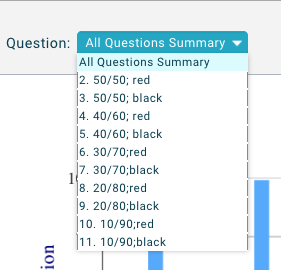
Figure 1: Switching between survey questions.
To switch between questions, use the drop-down list (Figure 1) to see the distribution of choices for each question.
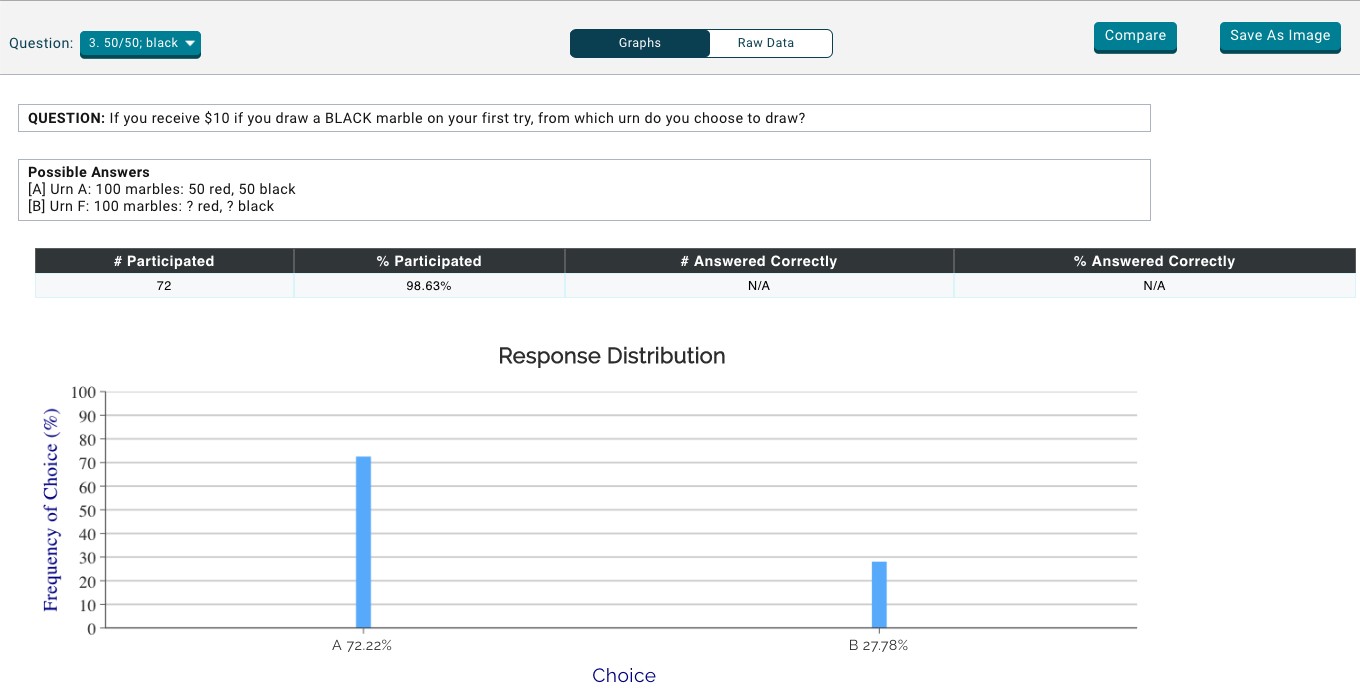
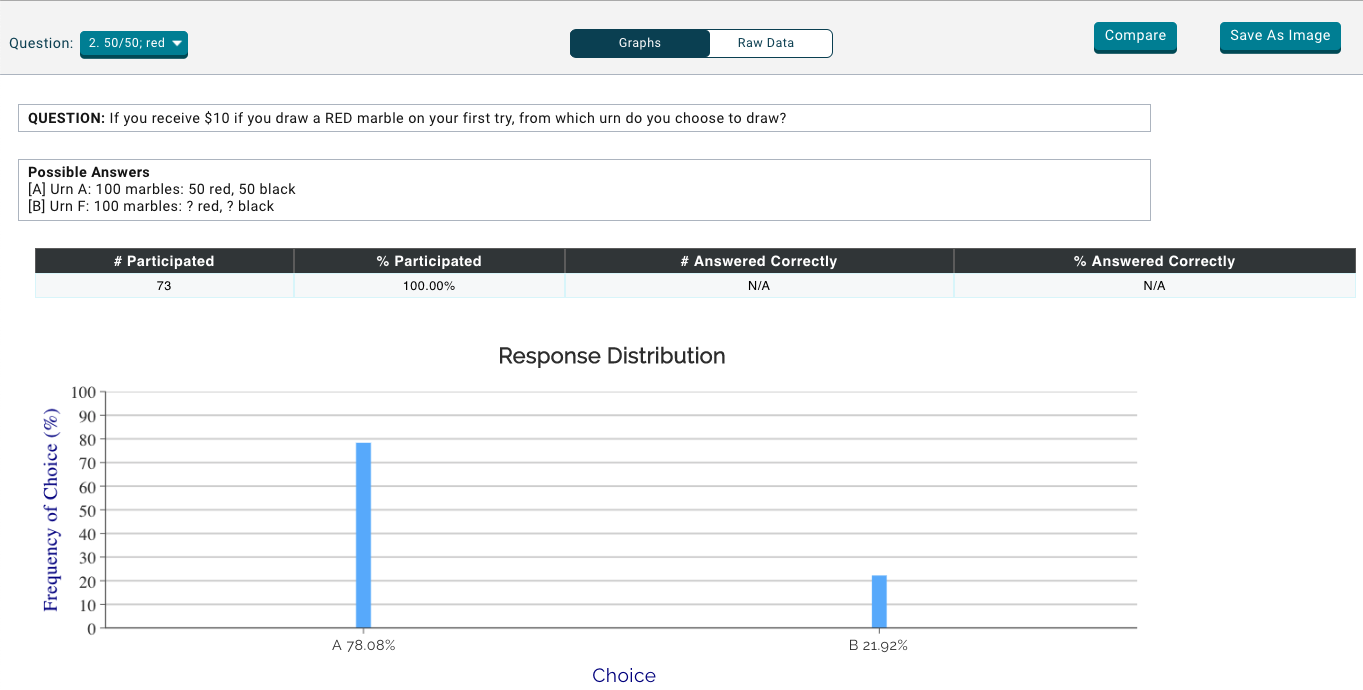
Figure 2: Choices when the known urn contains 50 of each and BLACK wins. Figure 3: Choices when the known urn contains 50 of each and RED wins.
Initial evidence of ambiguity aversion comes from looking at student choices when the known urn contains 50 marbles of each type (the original Ellsberg Paradox). Our example results are typical. When BLACK wins, the overwhelming choice of the known-distribution urn (Figure 2) is consistent with believing Urn F contains mostly RED marbles, while the strong preferences for the known-distribution when RED wins (Figure 3) is consistent with believing Urn F contains mostly BLACK. This inconsistency can be explained by ambiguity aversion.
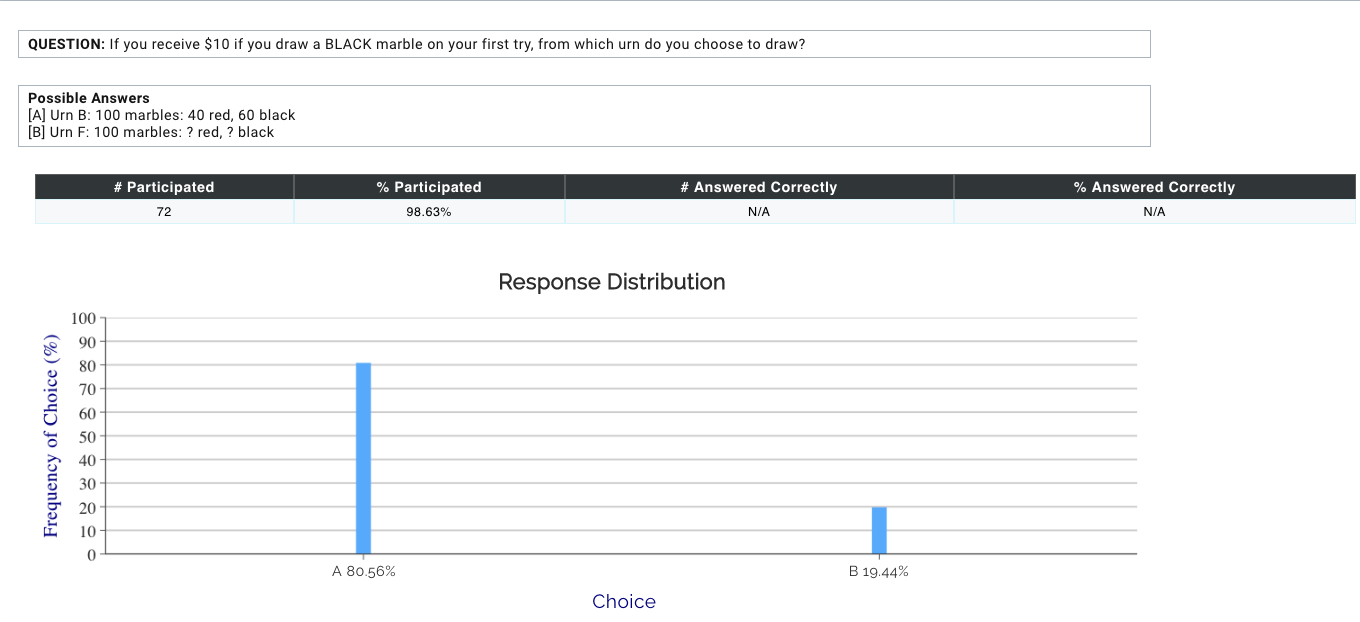
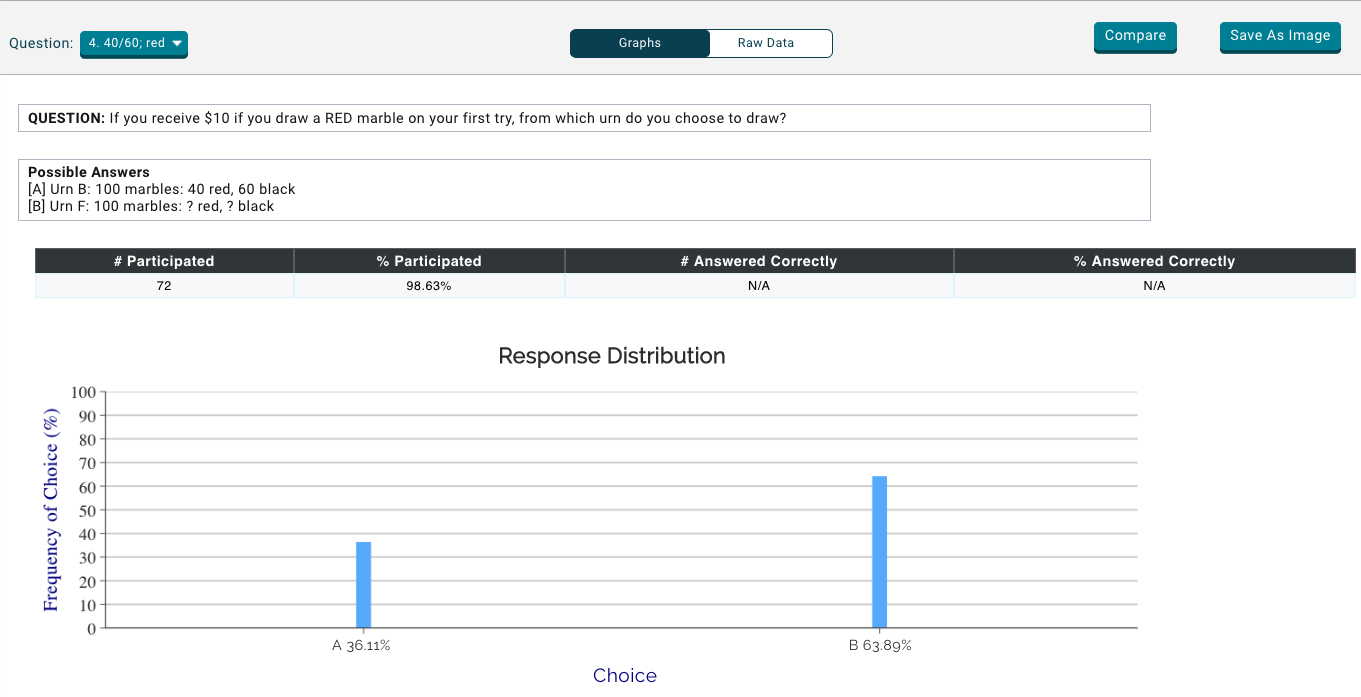
Figure 4: Choices when the known urn contains 60 of each and BLACK wins. Figure 5: Choices when the known urn contains 60 of each and RED wins.
Looking at choices when the known-distribution urn contains mostly BLACK marbles reveals the strength the preference for known risks. When the known-distribution Urn contains 60 BLACK and BLACK wins, only 20% chose the unknown Urn (Figure 4), suggesting 80% believed that Urn F contained fewer that 60 BLACK. When RED wins, the fraction making a choice consistent with believing that Urn F contained fewer than 60 BLACK falls by 20% (Figure 5). This suggests that approximately 20% of this student population has a reasonably strong aversion to ambiguity.
1 Ellsberg, Daniel. "Risk, Ambiguity, and the Savage Axioms." The Quarterly Journal of Economics 75, no. 4 (1961): 643-69. doi: 10.2307/1884324. ↩