Dogged pursuit: Duluth’s
Emily Ford faces her toughest
winter adventure yet —
Alaska’s famed Iditarod

Her love of winter expeditions has met a match in the competitive dog mushing community in Alaska.

WILLOW, ALASKA — The ground blizzard swept through at the worst possible moment.

Bitter cold wind scattered snow 20 feet in the air. Like a beast, the mass threatened to overwhelm musher Emily Ford and her team of Alaskan Husky sled dogs.

They were 15 miles from finishing Alaska’s Kobuk 440-mile race last April. But the dogs, wired for running, had quit — a musher’s nightmare. Had Ford misread them? Would they move another inch?

Ford scrambled to use her sled as a wind block, covered the dogs in their blankets and huddled on the snow to bond with them for an hour. A race official showed up on a snow machine and asked if she wanted to scratch.

Ford considered the question for a few moments. After years of adventures in extreme winter conditions — she was the first woman to winter thru-hike the 1,200-mile Ice Age Trail across Wisconsin and had solo skied across the Boundary Waters Canoe Area Wilderness — she had an internal checklist she used to power through difficult situations like this:

Are we safe? Yes.

Do we have a way to make a meal? Yes.

What’s the energy of the dogs? Tired.

But are there dogs that want to keep going? Yes.

No, Ford told the official. She and her team weren’t finished.

Emily Ford sits with Porsche, one of her potential lead dogs, on Jan. 20 at Shameless Huskies Kennel in Willow, Alaska. Ford, who grew up in Brooklyn Park and lives part of the year in Duluth, is a rookie musher in the 2025 Iditarod — the 1,000-mile trek known as the Last Great Race on Earth.

Anchored in Alaska

It’s a cool January morning in the tiny community of Willow, Alaska, about 70 miles north of Anchorage, and Shameless Huskies Kennel is stirring to life.

The winter sun has only just appeared around 10:30 a.m. when Ford, 32, and three fellow mushers make quick work of breakfast. There are 40 other mouths to feed out in the yard, a clearing tucked among snow-clad spruce and hardwoods.

While daylight is weak and in short supply, the kennel to-do list isn’t. Not in the heart of sled dog racing season.

Ford and her partner, Anna Hennessy, 34, have just returned from running kennel teams in the Copper Basin 300 — a 300-mile race in southeast Alaska — and sleds loaded with cook kits, extra gear, sleeping bags and dog snacks need unpacking.

Hennessy, whose passion for sled dogs was forged at the Sawtooth Racing kennel near Grand Marais, is the connective tissue between Ford and Alaska.

The two met during Ford’s 28-day ski trek across the Boundary Waters in early 2022. Leaving from the western edge of the wilderness, Ford covered about 180 miles in 28 days. She met Hennessy at her final resupply stop, and the two kept in touch.

“What I knew is, this was a really cool girl I liked, and she was doing a really cool thing that I also had an interest in,” Ford recalled.

Love bloomed. Their spirits for adventure entwined, and Ford decided to spend half her year in Willow, where Hennessy had taken a job managing and racing for Shameless Huskies.

The two are in their third winter at the kennel and well into another racing season — though this one is unlike any other.

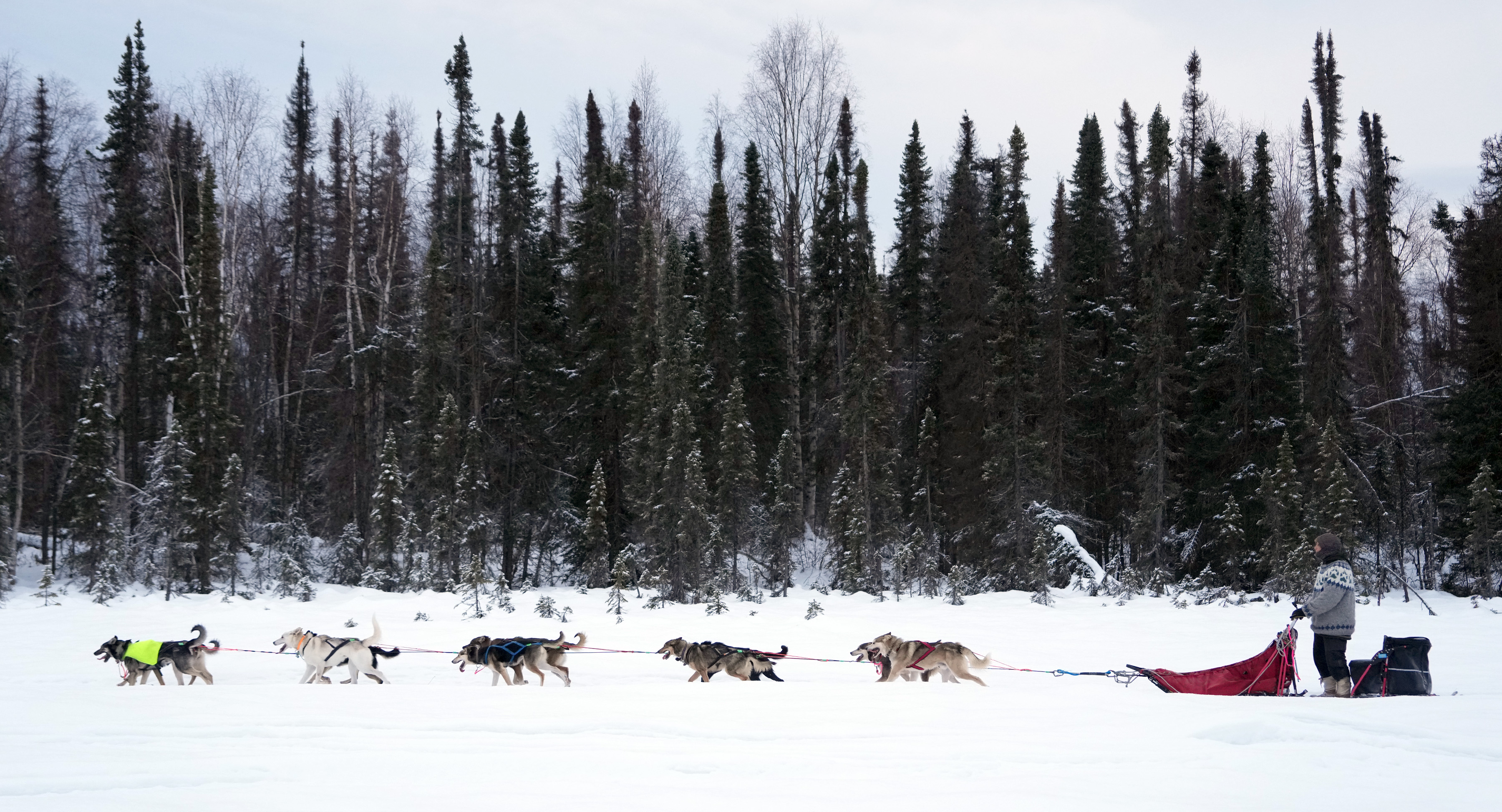
With her results from the 2023-24 race season, Ford qualified as a rookie musher for the 2025 Iditarod. Known as the Last Great Race at 1,000 miles, the start this year will be on March 3 in Fairbanks, with a ceremonial start March 1 in Anchorage. The trail typically winds over vast mountain passes and across dangerous sea ice. Mushers and their teams endure gale winds, subzero cold and fatigue capable of breaking even the toughest competitors.
Ford says she is ready for the obstacles and hardships that come with it. But if the Iditarod is not just another race, Ford is not just another competitor.

If she crosses the finish line, she would be just the second Black female musher to do it, a feat that would also cap an extraordinary period in which Ford has continued to push her limits through a series of ever longer, colder and more dangerous outdoor adventures.

“If she has fear about doing something, she will put it in a compartment,” her mother, Paula Ford, said. “She doesn’t let the fear of the unknown control her. She is able to put that fear in a place that a lot of people can’t put it and move forward.”

photo
Emily Ford met her partner, Anna Hennessy, during Ford's 28-day cross-country ski traverse of the Boundary Waters in 2022. Hennessy, a Red Wing native who completed the 2024 Iditarod, also works with Shameless Huskies Kennel and has helped Ford learn the craft of preparing for races and caring for sled dogs — including Rolls, one of the "Luxury Car Litter" along with Beamer, Lambo and Porsche.

‘A sense of wonderment’

It’s a long way from Minnesota to Willow. Yet Ford’s mother said the signposts leading there have been up since her daughter’s childhood in Brooklyn Park.

Ford always explored her boundaries. She packed peanut butter and saltines and took mini expeditions along the railroad tracks near her home.

On visits to her grandparents’ 80 acres up north, Ford got her hands dirty in a big vegetable garden. She fished and built forts in the woods with a neighbor girl whose family took them to the BWCAW. Family dogs were always underfoot.

The setting cultivated a connection to the outdoors — and a foundation to dream.

“It’s part of our DNA,” Ford’s mother said of previous generations. “That sense of wonderment.”

The seeds continued to plant ideas. In college, Ford got to head north to Wintergreen Dogsled Lodge in Ely, where polar explorer Paul Schurke runs his Canadian Inuit dog teams.

The experience left a mark. Paul has made a life out of dogs, she thought.

Ford moved to Duluth after graduation and bought her first canine “adventure buddy,” as she calls him. Zulu, a lovable, black Catahoula, remains by her side. She continued to push herself into new adventures.

“I had no idea what I was doing,” she said, recalling a multi-day trek on the Superior Hiking Trail. But before long she thru-hiked the whole thing. Then she knocked off northern Minnesota’s 65-mile Border Route and 46-mile Kekekabic trails.

Other paths were unexpected. In 2016, she answered a job opening for head gardener at Glensheen Mansion in Duluth. Working there from April to mid-November allows her to make winter her playground.

Late in 2020, Ford lit out for the Ice Age Trail, posting online as she hiked about the joys and challenges. The timing and rigor, her companion (a borrowed sled dog named Diggins), and Ford’s race and gender drew a following.

Afterward, Ford said she took on the Ice Age Trail because it married her interests: a love of winter, dogs and solo expeditions. She was glad people related to her accomplishment on other terms.

A sense of adventure was evident in the young Emily Ford, especially in trips to her grandparents' farm in Jacobson, Minn., and it's led her to Alaska and a new chapter with Porsche and the other sled dogs on her Iditarod team.

“If the result of me doing something that I love is that other people feel more comfortable and it pushes social justice and racial justice forward, that’s fantastic. I love that,” she said then. “One day, I hope a Black woman going backpacking won’t be such a big deal.”

Today, Ford is more assured about representing people of color in the outdoors. More knowledgeable, too. The Iditarod has a deep lineage of diversity, including Indigenous and female mushers, but few look like Ford, who was inspired by the idea that she might be the first Black woman to attempt the race.

She later learned Becca Moore, a Black woman from Alaska, had finished the race in 2015 and 2016. Ford messaged Moore, telling her “it’s important that I am standing on your shoulders … you are the one that paved the way for me.”

Ford also draws inspiration from Black explorer Matthew Henson, an accomplished dog handler who some historians say was the first man to set foot on the North Pole in the early 20th century.

Ford is excited at the prospect of being, as she calls it, “a pinpoint” next to Moore in the Iditarod story. She is one of 10 women on the roster of 34 mushers in this year’s race.

“Being a Black musher is really important right now,” Ford said, adding “a good musher is a good musher.”

Emily Ford shares stories of her winter adventures and shows some of the work that goes into preparing to tackle the Iditarod.

In the dog yard

Good mushers are dog-centric.

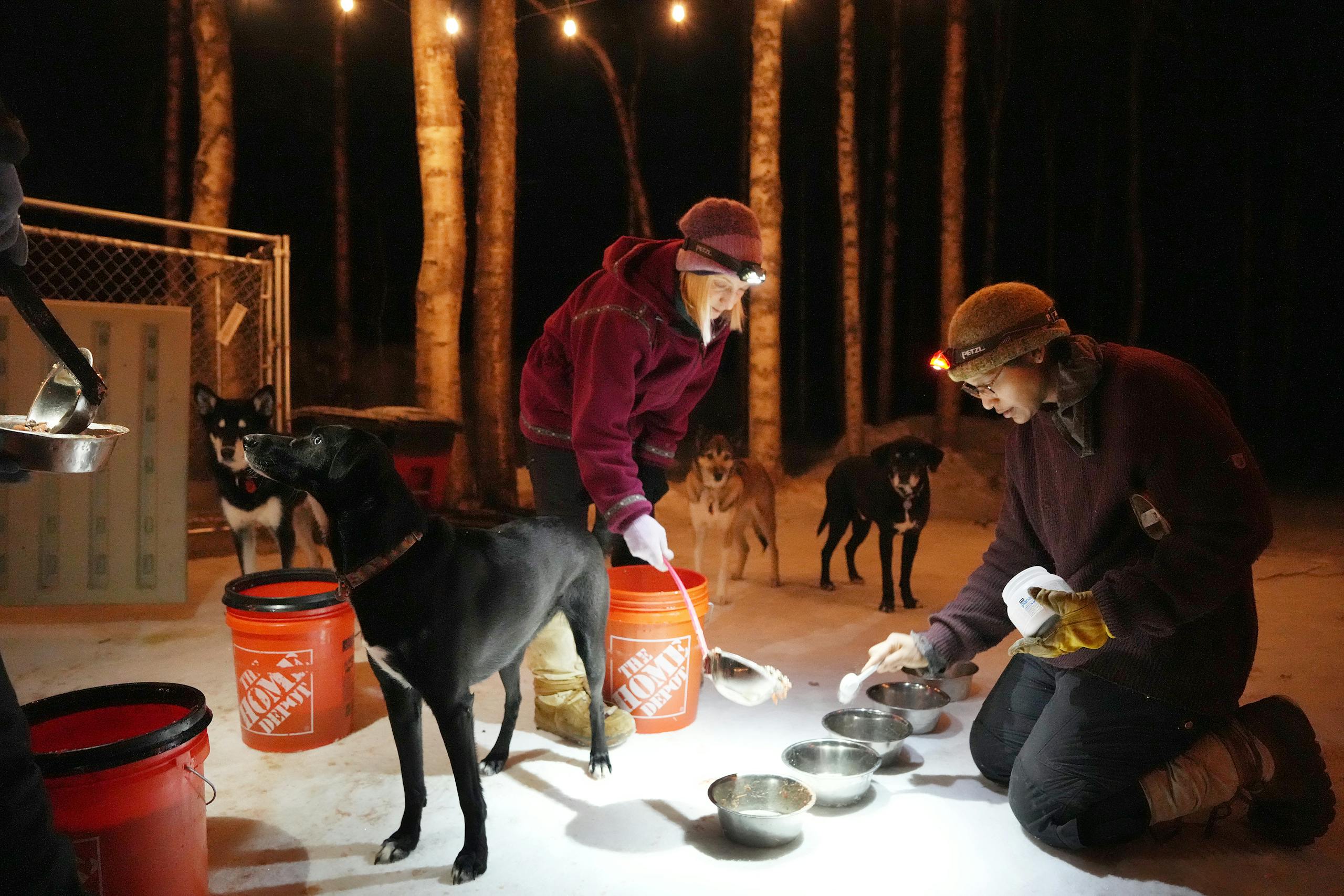
Twice-a-day feedings are considerable. Ford, Hennessy and their Shameless Huskies colleagues Olivia Frank and Skylar Whitcomb, also of Minnesota, pull out 5-gallon pails to combine beef, fat, high-end kibble, multivitamin supplements and hot water. All is ladled, chili-like, into dog bowls.

A clean kennel is a must, making poop detail near-constant. Sore shoulders get rubbed. Wounds are treated. Hugs and hellos flow like water from one dog to the next.

The yard — full of puppies, yearlings and adults — explodes in a mini bomb of teeth, hair and piercing yaps when a sled and gangline — the system of ropes and clips that connect the dogs to the sled — appear.

Ford helped care for the dogs during her first winter in Alaska two years ago and assisted Hennessy at races. Hennessy completed the 2024 Iditarod as a rookie in a little more than 11 days. The final musher arrived in Nome in about 12½ days. The winner, Dallas Seavey, finished in 9 days, 2 hours and 16 minutes.

Ford got to try mushing in a race. Then, last winter, she took it to a higher level, with events like the Kobuk 440 and Copper Basin 300.

photo
Emily Ford, Anna Hennessy and the staff at Shameless Huskies Kennel feed their dogs twice a day, giving them a protein-rich mix of beef, fat, high-end kibble and multivitamins. Ford uses an axe to chop a frozen slab of beef under the watchful eye of Ambler, a yearling sled dog.

“Anything Emily does is not surprising,” her mom said. “After experiencing last year and the longer races and more time with the dogs, her passion for it changed.”

Examine what Ford calls the “niche world” of dog mushing and you’ll see that devotion to the huskies — sweating their every detail — is mandatory to succeed.

The role of the women is dog coach, caretaker and therapist. Some hungry dogs are cranky. Some hate each other for no reason. Like schoolkids, they have good days and bad.

“I envision being a parent is very similar to being a musher — except we get to leave ours outside at night,” Ford said.

Ford considers their personalities when deciding which dogs will run and their place on the gangline; among the likely dogs on her 16-member Iditarod team are energetic brothers, Odyssey and Iliad, who work well as team dogs in the middle.

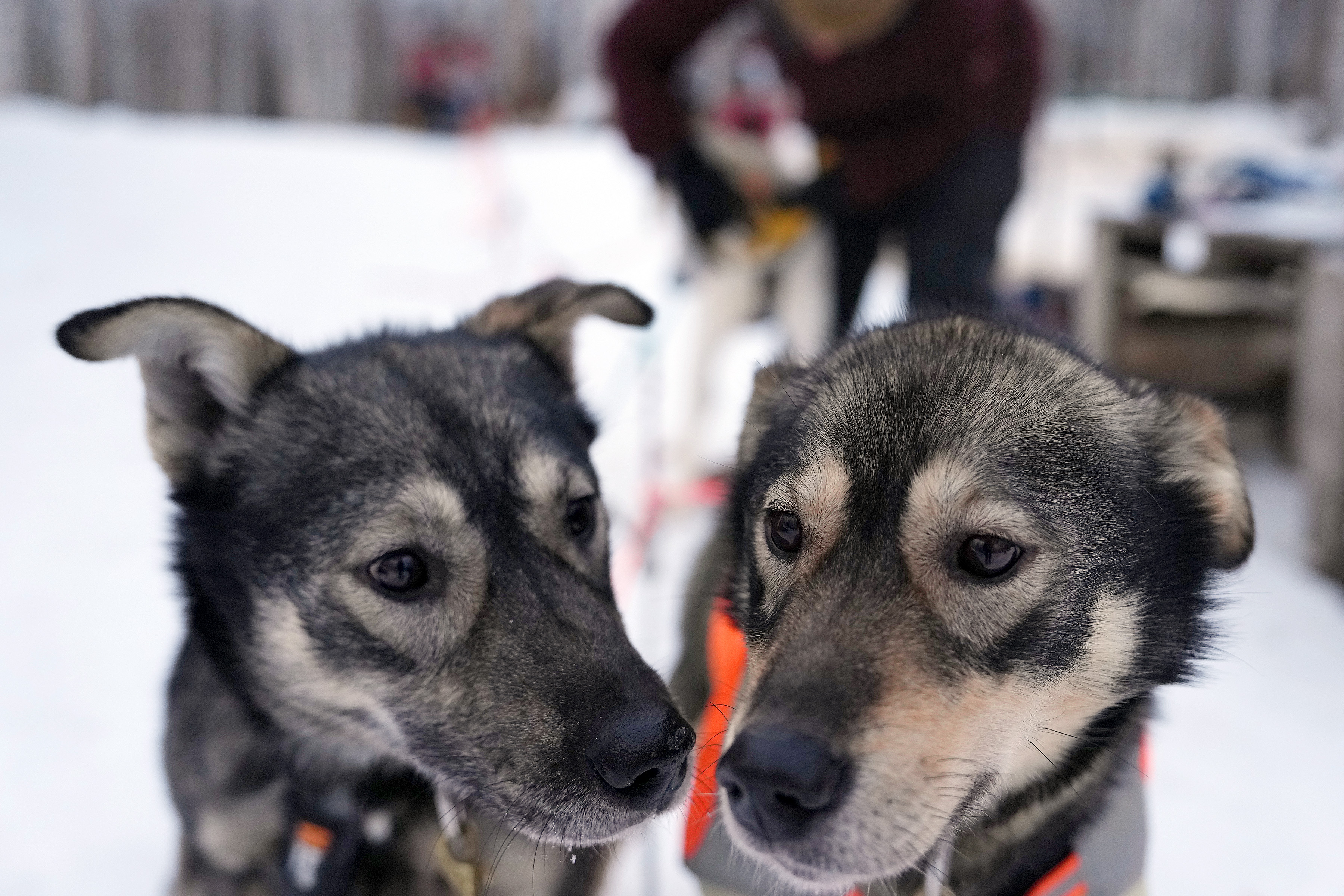
The so-called “Luxury Car Litter” is a lock, too: Rolls, Beamer, Lambo and Porsche, a lead dog who has what Ford calls the “never-quits.”

An adult named Laurakins, an Iditarod veteran, is lead dog material, too. “We are not going for the fastest record. We just want to finish, and sometimes having a dog that knows the trail is helpful,” Ford said. “They indicate to the younger dogs, this isn’t going to last forever, this is our rest. They know. Laurakins knows.”

Frank is impressed with Ford’s steady focus.

“She always has a plan and knows what she wants to accomplish,” Frank said. “She’s a natural leader and doesn’t wait for someone else to take the initiative.”

photo
Lambo, left, and Porsche in a rare subdued moment for the dogs once they're hooked into the gangline for a trail run.

#EmilyonTrail

While a kennel of dogs is always demanding, Ford burns hours attending to humans, too.

Social media celebrity followed Ford’s Ice Age Trail hike, as did dozens of appearances. Thousands of followers flocked to her Instagram account interested in her gear talk, selfies with her dogs and ruminations on life. The attention excited her; it also demanded too much of her time and energy.

“I was giving so much of myself to the media and trying to do this [Glensheen] job,” she recalled. “My relationship is suffering. I am depressed. My partner is depressed.”

#EmilyOnTrail has stuck as her signature, but Ford’s perspective on social media exposure has evolved.

Posting dog race videos and stills? Sure. Continuing to project a message of Black inclusiveness in the outdoors? Absolutely. But the threshold for what makes the public domain is higher.

“I want [Anna and I] to be able to have a life and not be at the whim and mercy of followers,” said Ford, who added that she feels fortunate to have a base of supporters she can pitch for financial support — something most mushers seek.

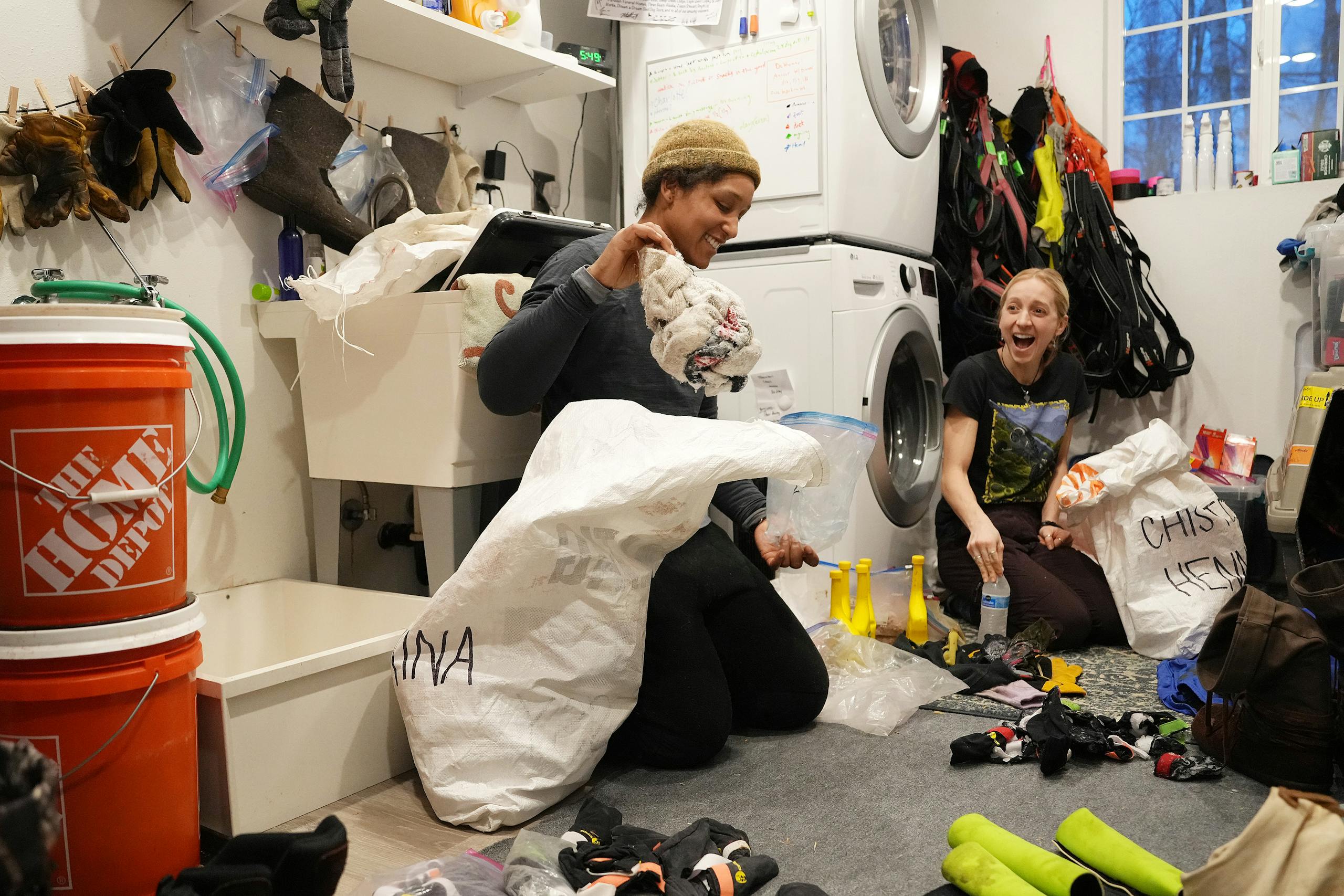
Running an Iditarod can cost $50,000 and up. Ford’s supporters have sponsored race dogs for $300 apiece or chipped in money for drop bags of gear and food that’ll get sent to nearly 25 Iditarod checkpoints. Schoolkids have made dog blankets. Booties can be bought five for $5.

Minnesota businesses like Wintergreen Northern Wear and Granite Gear and groups like the Friends of the Boundary Waters Wilderness have stepped up, too.

Hennessy calls the communications “the business days, because it is super-necessary. It is fun to do and to share, but it takes time.”

It allows Ford to do what she loves.

photo
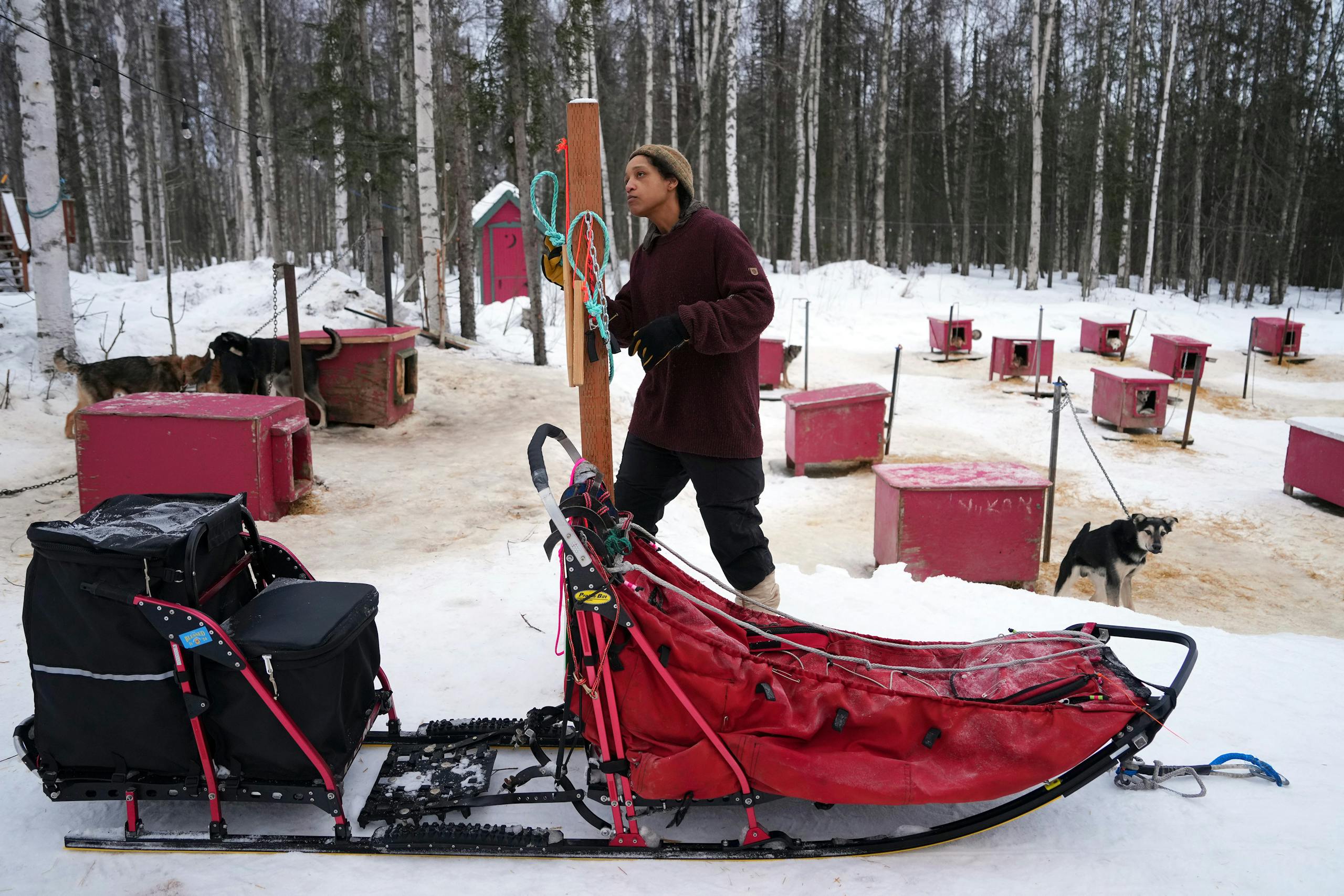
Emily Ford prepares her sled for a training run, and when she's not on the trail, there is no shortage of other duties, such as trimming the nails of Charlotte or massaging the sore shoulders of Metallica, one of her potential lead dogs. “I envision being a parent is very similar to being a musher — except we get to leave ours outside at night,” Ford says.

Ready for her biggest challenge yet

Back at the kennel, Ford lingers at one of the dozens of red, hay-stuffed boxes that house the dogs. At the end of a long chain is Metallica, whose soft eyes belie her fierce endurance. She’s a favorite but also dinged up, a willing patient as Ford gently works her fingers through the dog’s shoulder.

On some level, Ford is more concerned about her team’s condition than her own.

“One of my biggest fears is getting so tired that I won’t do something right by the dogs,” Ford said. “They are my everything on the trail, but sleepiness can get the better of your brain.”

In that dicey moment during the Kobuk last April, with the dogs in a stupor during the sudden blizzard, Ford buried her worry and fatigue to think about what they needed from her. And so she morphed — from musher to cheerleader.

“I was singing and dancing,” she recalled. “It’s what you’ve got to do. Because you know they can do it.”

They went on to complete the race — a finish that helped Ford qualify for this year’s Iditarod.

“I’m really happy with the way life has curved around this corner,” Ford said.

She doesn’t know where that curve will lead, only that for now it has allowed her to take a long winter expedition — her latest, greatest and toughest — with her “16 best friends.”

Once again, Ford knows she’s not yet finished.

Go online to iditarod.com and click the Insider tab to learn how to track the race and teams live.

photo
Emily Ford is looking to become the second Black woman to complete the Iditarod. “She always has a plan and knows what she wants to accomplish,” says Olivia Frank, one of Ford's Shameless Huskies co-workers.